
 By
By 
Credit is a cornerstone of modern financial systems, enabling individuals, businesses, and governments to access funds for consumption, investment, and growth. While commonly associated with loans and credit cards, credit encompasses a broader spectrum, influencing purchasing power, financial planning, and economic stability. Understanding credit, its mechanisms, and its strategic management is essential for achieving financial health and making informed business or personal decisions.
This article provides a comprehensive exploration of credit, including its types, calculation methods, strategic uses, risks, and real-life implications.
What is Credit?
At its core, credit represents the trust extended by a lender to a borrower, allowing the borrower to access funds or resources with the promise of future repayment. This transaction is foundational to both personal and commercial finance. Credit functions on three primary principles:
- Trust and Reputation: Lenders assess the borrower’s ability and willingness to repay, often using credit histories or ratings as indicators.
- Time Value of Money: Borrowers receive immediate access to funds, while lenders earn interest or other compensation for deferring repayment.
- Legal Obligation: Credit agreements are binding contracts outlining repayment terms, interest rates, and penalties for default.
Credit is not merely a financial tool but a mechanism that enables economic activity, investment, and consumption at scales beyond immediate cash availability.
Types of Credit
Credit manifests in various forms, each with unique structures, purposes, and repayment requirements. Understanding these types is crucial for strategic financial planning.
1. Revolving Credit
Revolving credit allows borrowers to access funds repeatedly up to a pre-approved limit. The most common example is a credit card. Key features include:
- Flexible Repayment: Borrowers can pay a minimum amount or the full balance.
- Interest on Outstanding Balance: Interest accrues only on borrowed amounts, not the total credit limit.
- Continuous Availability: Once repayments are made, the credit becomes available again.
Revolving credit provides liquidity and flexibility but requires disciplined management to avoid escalating debt.
2. Installment Credit
Installment credit involves borrowing a fixed amount and repaying it over a set period through regular payments. Examples include mortgages, auto loans, and personal loans. Key characteristics:
- Fixed Payment Schedule: Payments are predictable, aiding budgeting.
- Interest Costs: Often structured at fixed or variable rates.
- Specific Purpose: Usually tied to a particular purchase or investment.
Installment credit supports large expenditures while providing structured repayment plans.
3. Secured and Unsecured Credit
- Secured Credit: Backed by collateral, such as a house or vehicle. Lenders can seize the collateral if repayment fails. Secured credit often carries lower interest rates due to reduced lender risk.
- Unsecured Credit: Not backed by assets, including most credit cards and personal loans. These carry higher interest rates to compensate for increased risk.
Choosing between secured and unsecured credit requires balancing risk tolerance and financial goals.
4. Business Credit
Businesses utilize credit to finance operations, expansion, or equipment purchases. This includes:
- Lines of Credit: Flexible funds drawn as needed.
- Trade Credit: Suppliers allow deferred payment for goods or services.
- Business Loans: Structured financing for specific projects.
Business credit impacts operational efficiency, growth opportunities, and liquidity management.
5. Government and Student Credit
Governments and students also rely on credit structures:
- Student Loans: Facilitate education funding with deferred repayment terms.
- Government Bonds and Treasury Credit: Allow governments to raise capital for public projects while offering investors fixed returns.
These forms of credit underpin long-term investment in human capital and infrastructure.
How Credit is Assessed
Creditworthiness determines access to credit, influencing interest rates, limits, and approval. Lenders evaluate credit using multiple factors:
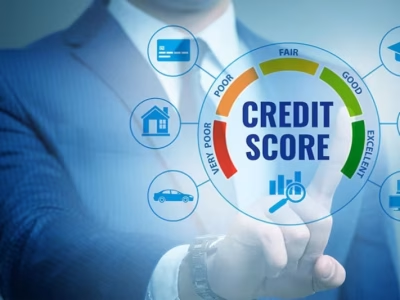
- Credit Score: A numerical representation of a borrower’s credit history, payment punctuality, and outstanding debts. Scores range typically from 300 to 850, with higher scores reflecting lower risk.
- Debt-to-Income Ratio: Measures a borrower’s total debt relative to income, indicating repayment capacity.
- Employment and Income Verification: Confirms stable earning potential.
- Credit History: Length of credit use, past defaults, and repayment patterns inform lenders of reliability.
A strong credit profile enhances borrowing capacity and reduces financing costs.
Strategic Use of Credit
Credit, when managed strategically, can be a powerful financial tool:
- Leveraging Purchases: Credit enables acquisitions that generate returns exceeding borrowing costs, such as business equipment or real estate.
- Building Credit History: Responsible credit use improves credit scores, facilitating access to better loan terms in the future.
- Cash Flow Management: Revolving credit or lines of credit can stabilize cash flow for personal or business needs.
- Emergency Preparedness: Access to credit provides a financial safety net during unexpected expenses or downturns.
The key to strategic use lies in disciplined repayment, understanding terms, and minimizing high-interest debt.
Risks Associated with Credit
Credit also carries inherent risks, which, if mismanaged, can lead to financial instability:
- High Interest Costs: Excessive reliance on high-interest credit can lead to compounding debt.
- Credit Score Damage: Late payments, defaults, or overutilization negatively affect credit ratings.
- Bankruptcy Risk: Unmanageable debt may culminate in legal insolvency.
- Economic Sensitivity: Changes in interest rates, inflation, or employment can impact repayment ability.
Mitigating these risks requires careful planning, budgeting, and periodic review of financial obligations.
Credit in the Digital Era
Technology has transformed credit management, accessibility, and monitoring:
- Online Credit Monitoring: Platforms provide real-time updates on credit scores, alerts for changes, and personalized advice.
- Fintech Solutions: Digital lenders offer faster approvals, alternative data assessment, and flexible repayment options.
- AI-Driven Risk Assessment: Algorithms predict borrower risk profiles more accurately, optimizing lending decisions.
- Digital Wallets and Buy-Now-Pay-Later Services: Offer micro-credit solutions for consumers and businesses.
Digital tools enhance transparency, accessibility, and efficiency in credit management.
Building and Maintaining Good Credit
Maintaining a strong credit profile is crucial for financial flexibility. Effective practices include:
- Timely Payments: Always paying bills on or before the due date.
- Credit Utilization Management: Keeping balances below 30% of available credit.
- Diverse Credit Portfolio: Combining revolving and installment credit responsibly.
- Regular Monitoring: Reviewing credit reports to correct inaccuracies or detect identity theft.
- Prudent Borrowing: Avoiding unnecessary debt and understanding loan terms thoroughly.
A robust credit profile translates into better interest rates, higher borrowing limits, and improved financial opportunities.
Credit and Economic Growth
Credit is not only a personal or organizational tool but also a driver of economic activity. When effectively distributed, credit facilitates:
- Business Expansion: Access to capital funds operational growth, hiring, and innovation.
- Consumer Spending: Credit enables purchases that drive demand for goods and services.
- Investment in Infrastructure: Government and corporate borrowing fund critical projects, enhancing productivity.
- Financial Inclusion: Access to credit empowers individuals in underserved communities to invest in education, housing, or entrepreneurship.
The cyclical use of credit fosters liquidity, promotes economic growth, and stabilizes markets.
Conclusion
Credit is a multifaceted financial instrument that plays a critical role in both personal and business finance. Understanding its types, assessment methods, strategic uses, and associated risks empowers individuals and organizations to leverage credit effectively. In a digital and globalized economy, responsible credit management not only enhances financial stability but also opens avenues for growth, investment, and wealth creation. With disciplined use and informed decision-making, credit becomes more than borrowing—it becomes a tool for opportunity and long-term financial resilience.
FAQs About Credit
What is the difference between secured and unsecured credit?
Secured credit is backed by collateral, reducing lender risk and often carrying lower interest rates. Unsecured credit has no collateral, resulting in higher interest rates due to increased risk.
How can I improve my credit score?
Timely payments, low credit utilization, a mix of credit types, and regular monitoring of credit reports are key strategies.
What are the risks of misusing credit?
Excessive interest costs, credit score damage, debt accumulation, and potential bankruptcy are primary risks.
How do lenders evaluate creditworthiness?
Lenders assess credit scores, debt-to-income ratios, income stability, and credit history to determine borrowing eligibility and terms.
Can businesses use credit to enhance growth?
Yes, business credit can fund operations, expansion, equipment purchases, and cash flow stabilization, contributing to long-term growth.
How has technology impacted credit management?
Digital platforms, AI-driven risk assessment, online monitoring, and fintech solutions have streamlined access, tracking, and analysis of credit for both consumers and businesses.
What is the role of credit in the economy?
Credit facilitates consumer spending, business expansion, investment in infrastructure, and financial inclusion, driving overall economic growth.
This in-depth exploration demonstrates how credit functions as a central mechanism in finance, bridging short-term needs with long-term strategic planning, and shaping economic landscapes at both individual and institutional levels.







Comments